
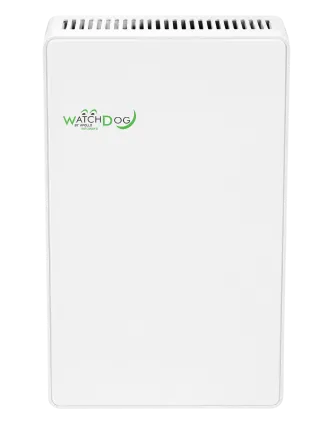
WD-AP900
- Wi-Fi 6 (IEEE 802.11ax) Standard
- BSS Coloring
- Innovative AI-Native Capabilities
- Target Wake Time (TWT)
- Advanced Security (WPA3)
Key Features
Wi-Fi 6 (802.11ax) Standards
Orthogonal Frequency Division Multiple Access (OFDMA)802.11ax uses OFDMA to allow multiple users to transmit data simultaneously. OFDMA splits a channel into sub- channels, known as resource units (RUs), with specific subcarriers, and assigns RUs to different users for simultaneous transmission. OFDMA enables simultaneous multi-user transmission and reduces latency caused by channel contention.
DL/UL MU-MIMODL/UL MU-MIMO technology allows AP to send data to multiple stations simultaneously, breaking through the traditional wireless serial communication mechanism, increasing the utilization rate of wireless spectrum resources, and improving the number of effective access users and access experience under high-density deployment.
BSS ColoringSpatial reuse allows the access points and their clients to differentiate between BSSs, assigns a different color per BSS to help access point identify co-channel interference and stop transmission in time. This optimizes frequency reuse and improves network capacity.
Target Wake Time (TWT)TWT improves power efficiency and reduces contention by increasing client sleep time and allowing negotiation of the times that clients can access the medium.
Innovative AI-Native CapabilitiesThe access point can realize AI-based radio frequency (RF) management, the connection of the terminal to the network, service assurance, and healing of the network through the convergence of cloud, networking and edge and Intelligent Radio Resource Management (RRM), Intelligent Client Management, Intelligent Network Self-Healing and Diagnostics, and Intelligent Edge Network Management technologies.
Security Policy
Wireless security guaranteeThe APs support WPA2-Personal, WPA2-Enterprise, WPA3-Personal, WPA3-Enterprise authentication and encryption modes to ensure security of the wireless network.
Rogue Device MonitoringAPs support WIPS, and can monitor, identify, defend, counter, and perform refined management on the rogue devices, to provide security guarantees for air interface environment and wireless data transmission.
Link ProtectionThe CAPWAP link protection and DTLS encryption provide security assurance, improving data transmission security between the AP and the AC.
Network optimization
Doctor APDoctor AP mode, combining WD-AC and WD Cloudnet platform, collects wireless network information for scenarios where terminal access is abnormal, and analyzes and locates wireless faults quickly and accurately.
Radio Resource Management (RRM)Radio Resource Management (RRM), the AP monitors air interface channel utilization, channel interference, and signal conflict in real time, and works with WD Cloudnet to adjust RF parameters such as working channel, bandwidth, and power in a timely manner to maintain the optimal RF resource status.
Radio Resource Optimization Policy (RROP)Radio Resource Optimization Policy (RROP) refers to the collection of multiple wireless air interface optimization methods, which is committed to reducing or controlling the consumption of air interface media resources by management packets, broadcast packets, and invalid packets. Set aside more resources to provide users with better wireless application services.
Station Access Control Policy (SACP)The Station Access Control Policy (SACP) restricts, controls, and guides the access of wireless terminals to better AP or wireless services. In addition, terminal traffic is controlled and scheduled according to network applications to improve the overall performance of the wireless network and improve the experience and effect of wireless access applications.
Roaming ProtectionWireless AP fully supports the Fast BSS Transition function defined in the 802.11r standard, which can accelerate the roaming process of wireless users, reduce the probability of connection interruption, and improve the roaming service quality. Through 802.11k protocol mechanism, AP and wireless client interact with each other to perceive the network topology in multiple dimensions. The AC recognizes and calculates the roaming time and roaming access location of the wireless client in full view, and negotiates the switch with the client through 802.11v and 802.11r mechanisms.
Cellular Coexistence Feature (CCF)The access point uses built-in software filtering to minimize the impact of interference from 3G/4G cellular networks.
SOFTWARE SPECIFICATIONS
Product Capabilities
- Basic information Indoor, dual-radio AP, 802.11a/b/g/n/ac/ac Wave 2/ax
- Frequency and MIMO
5GHz, 2×2:2, 2.4Gbps
2.4GHz, 2×2:2, 0.575Gbps
- Compliance and bandwidth
5GHz, 802.11a/n/ac/ax
20MHz/40MHz/80MHz/160MHz
2.4GHz, 802.11b/g/n/ax
40MHz/80MHz - Maximum transmission speed 2.975Gbps (2x2 80MHz on 5GHz, and 2x2 40MHz on 2.4GHz)
- Maximum number of clients
256
Note: the actual number of users varies according to the environment - Maximum number of SSIDs for each radio
4
802.11ax
- TWT
Target Wake Time, allowing clients to sleep for a predetermined period of time and be awakened only when network communication is needed,
effectively reducing the power consumption
- BSS coloring/SR
Spatial reuse, dividing different BSSs into different colors to avoid co-frequency interference and improve the user experience of wireless networks
- MU-MIMO Support Uplink OFDMA / Downlink OFDMA
- OFDMA Support Uplink OFDMA / Downlink OFDMA
WLAN Basics
- A-MPDU
Aggregated MAC Protocol Data Unit, improves the data transmission efficiency of wireless networks by optimizing the composition of TX/RX
directional data packets - A-MSDU
Aggregated MAC Service Data Unit, improves the data transmission efficiency of wireless networks by optimizing the composition of TX/RX
directional data packets - LDPC Low-density Parity-Check, Improves the communication efficiency of wireless networks through error correction coding technology
- STBC Space-Time Block Coding, Improve the Channel capacity of wireless networks through multi-antenna coding technology
- DFS
Dynamic Frequency Selection, automatically identify DFS frequency bands,
automatically adjust frequencies of the devices, and avoid interference
with other devices - LACP Link Aggregation Control Protocol, achieving bandwidth aggregation, redundancy backup, and load balancing, the APs require at least 2 ports
- TxBF
Transmit Beamforming, Improve the signal-to-noise ratio of wireless
network signal transmission by adjusting the beam direction of antenna
transmitting signals
Tunnel Management
- CAPWAP tunnel Unicast/broadcast/DNS/DHCP/static IP method for discovering AC
- DTLS Tunnel between AC and AP support DTLS encryption
- IPv4/IPv6 Tunnel between AC and AP support IPv4 and IPv6
- Time synchronization Synchronizing clock information from AC
- Dual tunnel Establishing CAPWAP tunnels with two ACs
- PPPOE Support PPPOE Client
- IPsec Automatic channel/power/bandwidth adjustment
- NAT Support NAT between AC and AP
- EoGRE Fit AP mode Supports EoGRE (Ethernet over GRE), generic Routing Encapsulation, used to encapsulate and unpack Ethernet data packets
WLAN Extension
- RF adjustment Automatic channel/power/bandwidth adjustment
- SSID hiding Restrict access and improve wireless network security by SSID hiding
- Limit the number of connected users
User access count restriction based on SSID and RF - Forwarding mode
Centralized forwarding/local forwarding/policy forwarding
Note: The AP supports centralized forwarding/policy forwarding only on
the AC in Fit AP mode - Local forwarding Supports interface/SSID/MAC binding VLAN based
- VLAN binding Supports interface/SSID/MAC binding VLAN based
- User isolation VLAN-based user isolation SSID-based user isolation
- Load balancing
Traffic-based load balancing
User-based load balancing
Frequency band-based load balancing, dual-5G devices only - Band steering Improve service quality by prioritizing access to 5G frequency
bands for
wireless clients - Roaming 802.11k and 802.11v smart roaming,
802.11r fast transition roaming - Multicast enhancement
Convert multicast data into unicast data for transmission, reducing
network congestion
- Wireless location Fit AP mode support BLE location
Fit AP mode support RSSI location - Mesh Mesh link, Mesh link security, Multi-hop Mesh
- Wireless probing Monitor the wireless network environment by monitoring wireless
network
messages - Hotspot 2.0 Fit AP mode support Hotspot 2.0
- Bonjour gateway Forwarding mDNS packets across VLANs
User Authentication
- 802.1X authentication Local and remote 802.1X authentication
- MAC authentication Local and remote MAC authentication
- Portal authentication
Support local Portal authentication
Support remote Portal authentication
Support Guest/Captive portal
Support portal mac-trigger
Support portal escape - PSK Support PSK and Private-PSK
- PPSK Fit AP mode Support Private Pre-Shared Key, obtain passwords to access
wireless networks through the Cloudnet platform - Social Media APPs Authentication
Cloud AP mode support Google/Facebook/Twitter through WatchDog
intelligent O&M platform
- Extensible Authentication Protocol (EAP)
EAP-Transport Layer Security (TLS) EAP-Tunneled TLS (TTLS) Microsoft Challenge Handshake Authentication Protocol (MSCHAP) v2 Protected EAP (PEAP) v0 or EAP-MSCHAP v2 EAP-Flexible Authentication via Secure Tunneling (EAP-FAST) PEAP v1 or EAP-Generic Token Card (GTC) EAP-Subscriber Identity Module (SIM)
Wireless Security
- Encryption
TKIP, CCMP, WPA2-Personal (802.11i)
WPA2-Enterprise with 802.1X
WPA3-Personal, WPA3-Enterprise
WPA3-Enhanced Open (OWE)
Advanced Encryption Standard (AES) - Forwarding security
Packet filtering
MAC address filtering
Broadcast storm suppression
- Wireless EAD
Coupled with EAD (End user Admission Domination) solution, implement
security policies for terminals accessing the network to improve wireless
network security
- Management frame protection
Provide management frame protection for wireless clients to enhance
wireless network security - WIPS
Wireless Intrusion Prevention System, protect the network from
unauthorized access, such as Rogue AP, Rogue client, Rogue Wireless
Bridge, Ad-hoc
Layer 2 and Layer 3
- IP address configuration Static IP/DHCP assigned IP
- Multicast IGMP Snooping/MLD Snooping
- DHCP Server/client/relay
- NAT NAT/NPAT/NAT ALG/NAT LOG
- LLDP Link Layer Discovery Protocol, discovering and identifying other LLDP
enabled devices and neighboring devices in the network
- IPv4 / IPv6 Supports ICMP/ACL/DHCP/TFTP/FTP/DNS policy
Service Assurance
- Remote AP After the tunnel between AC and AP is disconnected,
AP continues to provide services to clients - Doctor AP
The AP supports Doctor AP only on the AC in Fit AP mode, simulates
wireless client access process, diagnoses network issues, and improves
network experience - Only 802.11ax accessing
Only wireless clients that support 802.11ax can access the network,
improving the network experience. - Intelligent bandwidth Ensure that different wireless services can obtain the
lowest guaranteed
bandwidth during network congestion
- Port Aggregation Multiple uplink ports for port aggregation to increase uplink
bandwidth
(only applicable to multiple uplink port APs) - Broadcast Suppression
Discard ARP request and response packets from wireless clients during
the suppression cycle - Prohibit weak signal client access
AP prohibits wireless clients with signals below the threshold from
accessing, to avoid low-signal clients occupying more channel resources - Terminal roaming navigation
Adjust the AP transmission power to create more roaming conditions and
improve the roaming experience
- Actively triggering client relinking
AP actively sends messages to allow wireless clients to reconnect or roam
actively - Adjust channel reuse between APs
RF chip adjusts the environmental noise perceived by the device to
improve AP transmission efficiency - Fast forwarding function for client data services
Intelligent optimization of RF chip business processing can improve
performance - Shorten client sleep time
RF chips shorten client sleep time and improve transmission efficiency
through beacons - Software version anomaly repairing
After the software version is damaged due to abnormal circumstances, AP
can automatically download the available software version through AC or
cloud platform
Service Quality
- WMM Wi-Fi Multimedia, Improve the service quality of audio and video transmission in wireless networks through EDCA scheduling algorithm
- QoS
Priority Class, By marking TOS/DSCP fields to distinguish data streams with different priorities, high priority data streams can be quickly distributed, thereby improving service quality
Priority Class, supports mapping from wireless priority to wired priority
QoS policy mapping, support QoS policy mapping based on SSID and
VLAN
Layer 2 to Layer 4 packet filtering and traffic classification - CAR (Committed Access Rate), by limiting data transmission rate, avoid network congestion caused by traffic congestion
- User bandwidth management
Allocate available bandwidth per STA
Allocate total bandwidth for all STA shares based on SSID
Dynamically adjust the available bandwidth of STA based on business
- CAC
Call Admission Control, improve the quality of service for wireless clients
that have already received high priority by limiting the number of wireless
clients that have received high priority
Supports number of users/Channel utilization based
Power Saving
- Green AP mode Dynamically adjust MIMO configuration based on wireless client
access
status to reduce device power consumption
- U-APSD
Unscheduled Automatic Power Save Delivery, reduce device power
consumption by scheduling VoIP data streams separately from non-VoIP
data streams
- SM Power Save Spatial Multiplexing Power Save, reduce device power
consumption
through low-power standby mode
Management and Maintenance
- Centralized management
Fit AP mode, managed by AC Cloud AP mode, managed by the Cloudnet
platform - GUI Cloud AP mode Support WEB management via HTTP/HTTPS
- Secure boot
Supporting firmware protection, ensuring the integrity of the subsequent
running program codes through the trusted Boot-Loader, forming a
trusted device boot chain
- Remote debugging Support SSH V2.0/Telnet/FTP/TFTP/SNMP v1/v2c/v3
- Local debugging Support CLI
- Information maintenance Cloud AP mode Support Syslog
- Netconf Cloud AP mode Support Netconf provides programmable and scalable
methods to manage network devices
IEEE standards
- 802.11
IEEE 802.11a/b/g/n/ac/ac Wave 2/ax
IEEE 802.11d/e/h/i/w/u
IEEE 802.11k/v/r
- 802.3 802.3af/at
- 802.15 802.15.1
Hardware Specifications
| Item | Specification |
|---|---|
| Weight | 0.35Kg |
| Dimensions (W × D × H) | 160mm X 86mm X 39mm |
| Interface | 5 x 100/1000M Ethernet, RJ-45 (1 uplink + 4 LAN) |
| Console port | 1 × Management console port (RJ-45) |
| USB port | 1(2.0) at 2.5W |
| PoE input | GE1: 802.3af |
| PoE output | GE5: 802.3af |
| Local power supply | 54V DC |
| Antenna type | Built-in omni-directional antenna |
| Antenna Gain | 5GHz peak gain: 6dBi 2.4GHz peak gain: 4dBi Note: The equivalent antenna gain is 5dBi in 5GHz and 3dBi in 2.4GHz |
| Frequency bands | 2.400 to 2.4835GHz ISM 5.150 to 5.250GHz U-NII-1 5.250 to 5.350GHz U-NII-2A 5.470 to 5.725GHz U-NII-2C 5.725 to 5.850GHz U-NII-3/ISM Note: The available bands and channels are dependent on the configured regulatory domain (country) |
| Modulation technology | OFDM: BPSK@6/9Mbps, QPSK@12/18Mbps, 16-QAM@24Mbps, 64QAM@48/54Mbps |
| Modulation mode | 11b: DSSS: CCK@5.5/11Mbps, DQPSK@2Mbps, DBPSK@1Mbps 11a/g: OFDM: 64QAM@48/54Mbps, 16QAM@24Mbps, QPSK@12/18Mbps, BPSK@6/9Mbps 11n: MIMO-OFDM: BPSK, QPSK, 16QAM, 64QAM 11ac: MIMO-OFDM: BPSK, QPSK, 16QAM, 64QAM, 256QAM 11ax: MIMO-OFDM: BPSK, QPSK, 16QAM, 64QAM, 256QAM, 1024QAM |
| Maximum transmit power | 5GHz: 23dBm 4GHz: 23dBm Note: Transmit power is multi-chain combined power, no antenna gain is included. The actual transmit power depends on local laws and regulations |
| Adjustable power granularity | 1dBm |
| Reset/restoration to factory default support | Support |
| Installation | Wall mounting/ceiling mounting |
| Indicators (LED) | Alternating flashing mode, yellow/green/blue for different working states |
| Temperature | Operating temperature: –5°C to + 50°C Storage temperature: –40°C to + 80°C |
| Humidity | Operating humidity: 5% to 95% (non-condensing) Storage humidity: 5% to 95% (non-condensing) |
| Protection class | IP41 |
| Overall power consumption | ≤30W (include PoE_OUT/USB) ≤27.5W (without PoE_OUT/USB) |
| Safety standards | IEC/EN 62368-1 |
| EMC standards | CISPR 32 CISPR 35 IEC/EN 61000-4-2 IEC/EN 61000-4-3 IEC/EN 61000-4-4 IEC/EN 61000-4-5 IEC/EN 61000-4-6 IEC/EN 61000-4-8 IEC/EN 61000-4-11 IEC/EN 61000-3-2 IEC/EN 61000-3-3 |
| Radio standards | ETSI EN 300 328 ETSI EN 301 893 ETSI EN 300 440 FCC Part 15E |
| RoHS standards | DIRECTIVE 2011/65/EU (EU) 2015/863 |
| Health standards | EN 50385:2017, EN IEC 62311:2020 |
| MTBF (25°C) | >864581 hours |