Aggregation Data Center Switches

AGGREGATION DATA CENTER SWITCHES SERIES

The WatchDog Aggregation High-Density Intelligent Switch Series is built for data centers and cloud networks, offering powerful performance with up to 48×25G and 8×100G ports. It supports hot-swappable power supplies and fans for high reliability and easy maintenance. With advanced Layer 2/3 features like VXLAN and EVPN, it is ideal for high-density 25GE switching and Top-of-Rack (TOR) deployments in modern scalable networks.

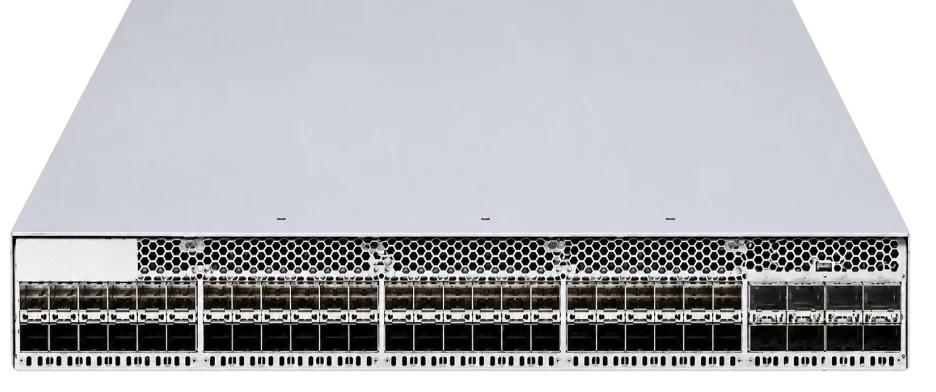
WD-GS-56XC switch

WD-GS-56XC

  • Service Slots:

    48 x 25G SFP28/10G SFP+/1G SFP port, 8 x 100G QSFP28/40G QSFP+ ports.
  • Out-of-band management port:

    1 x 10/100/1000BASE-T
  • Fan Tray Slots:

    4 Hot-swappable fans
  • Power Module:

    Dual Power module
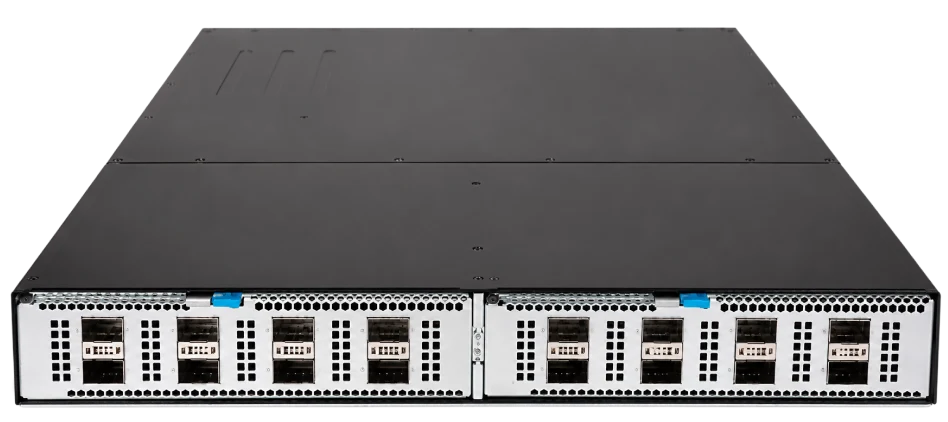
WD-GS-18QF switch

WD-GS-18QF

  • Service Slots:

    2x 100G QSFP28/40G QSFP+ port, 2 expansion slots
  • Out-of-band management port:

    One GE copper port and one GE fiber port
  • Fan Tray Slots:

    5 Hot-swappable fans
  • Power Module:

    Dual Power module

Key Features

High-Density 25GE Access

The WatchDog Aggregation Series offers a versatile and high-performance solution with high-density 100G, 40G, 25G, and 10G ports, delivering a wire-speed forwarding capacity of up to 4 Tbps. This impressive capacity ensures seamless handling of the growing data traffic in modern data center environments. With its standard 25G ports, the switch is perfectly suited for high-density server access in high-end data centres, providing efficient, high-bandwidth connections that can handle demanding applications such as cloud computing, virtualization, and big data processing.

VSS (second generation intelligent resilience architecture)

Facing the application requirements of the unified switching architecture of the data center, the series switches support the VSS technology, which virtualizes multiple devices into one logical. The equipment has strong advantages in scalability, reliability, distributed and availability. VSS not only can achieve a long-distance intelligent elastic architecture within a rack, across racks, and even across regions.

Abundant data center features

The aggregation switch series enables scalable Layer 2 networking with VXLAN, improving network flexibility and efficient utilization of available paths. MP-BGP EVPN functions as the VXLAN control plane, simplifying configuration, reducing traffic flooding, and minimizing full-mesh connectivity between VTEPs through BGP route reflectors. Support for Fibre Channel over Ethernet (FCoE) allows storage, data, and compute traffic to converge on a single infrastructure, lowering deployment and operational costs. Integrated support for PFC, ETS, and DCBX ensures low latency and lossless transport for FC storage, RDMA applications, and high-performance computing environments.

WatchDog distributed resilient network interconnection (DRNI)

With DRNI (M-LAG) support, links from multiple switches can be aggregated into one logical interface to provide device-level link redundancy. This capability is ideal for servers dual-homed to a pair of access switches, ensuring node-level resilience. Simplified topology: DRNI reduces network complexity and streamlines spanning tree configuration by virtualizing two physical devices into a single logical device. Independent upgrades: Member devices can be upgraded individually and sequentially, minimizing the impact on traffic forwarding.

Software

SOFTWARE SPECIFICATIONS

IP Services
  • LAG
  • Static/Dynamic/Gratuitous/proxy ARP
  • ARP snooping/fast reply/direct route advertisement/ping
  • ARP attack detection
  • ARP source suppression
  • DHCP
  • DHCP Server/relay agent/client/snooping
  • DNS
  • DDNS
  • mDNS
  • IRDP
  • UDP helper
  • ND
  • ND snooping/proxy/direct route advertisement/ping
  • DHCPv6 Server/relay agent/client/snooping/guard
  • GRE
  • HTTP redirect
  • GRE tunneling
  • VXLAN tunneling and VXLAN-DCI tunneling
  • IPv4/IPv6 over IPv4 tunneling
  • IPv4/IPv6 over IPv6 tunneling
  • IPv4/IPv6 Fast Forwarding
Quality of Service (QoS)
  • ACL
  • Advanced ACL User-defined
  • ACL Ingress and Egress ACL
  • Ingress/Egress CAR Diff-Serv QoS
  • Eight queues on a port 802.1P/DSCP
  • Priority marking and remarking
  • 802.1p, TOS, DSCP, and EXP priority mapping
  • Flexible queue scheduling algorithms including SP, WRR, SP+WRR, WFQ
  • Traffic shaping and time ranges
  • Traffic classification based on source MAC, destination MAC
  • Source IP, destination IP, port, protocol, and VLAN
  • Congestion avoidance
  • Tail-Drop, RED, and WRED
  • Control Plane Protection (CoPP)
  • Wireless Intrusion Prevention System (WIPS)
Layer 2 Technologies
  • VLAN ID range 0 to 4095
  • Access/Trunk/Hybrid VLAN
  • Port-based VLAN
  • MAC-based VLAN
  • IP subnet-based VLAN
  • Protocol-based VLAN
  • IEEE 802.1P
  • Super VLAN
  • Private VLAN
  • Voice VLAN
  • QinQ
  • VLAN mapping
  • Static/Dynamic/Blackhole/Multiport unicast MAC
  • MAC automatic learning and aging
  • Port-based/VLAN-based MAC learning limit
  • MAC filter
  • Port isolation
  • Loop detection
  • MVRP
  • GVRP
  • STP, RSTP, MSTP
  • PVST compatibility
  • BPDU/root/loop/TC-BPDU/PVST BPDU/dispute loopback guard
  • BPDU filter
  • Static aggregation
  • Dynamic aggregation
  • High availability
  • Ethernet OAM
  • CFD
  • DLDP
  • RRPP and ERPS
  • Smart Link and Monitor Link
Ethernet Configuration
  • 10GE/25G/40GE/100GE port aggregation
  • LACP
  • S-MLAG
  • M-LAG
  • AutoMDIX
  • Duplex Auto/Full/Half
  • Link aggregation
  • VCT
  • Smart-Link
  • Secure boot
  • ISSU
  • Role/TC-BPDU transmission restriction
  • LLDP and LLDP-MED
  • DCBX
  • Broadcast/multicast/unknown unicast storm constrain
  • L2PT
  • Jumbo frame
  • Store-and-forward
  • Cut-through-forward
Routing
  • Static routing, RIP, OSPF, IS-IS, and BGP
  • IPv4/IPv6 dual stack
  • IPv4/IPv6 ECMP
  • IPv4/IPv6 PBR
  • IPv4/IPv6 Routing policy
  • IPv6 static routing, RIPng, OSPFv3, IS-ISv6, and BGP4+
  • Pingv6, Telnetv6, FTPv6, TFTPv6, DNSv6, ICMPv6
  • Dual-stack PBR
  • VRRPv2/v3
  • BFD and Hardware BFD
  • BFD for VRRP/BGP/IS-IS/OSPF/RSVP/static routing
  • Failover detection less than 50 ms
  • Track
  • Process redundancy/placement
  • CPU protection
  • Hot patching
Multicast
  • PIM-DM, PIM-SM, PIM-SSM, Any-RP
  • PIM snooping
  • MSDP
  • IGMPv1/IGMPv2/IGMPv3
  • IGMP proxying and IGMP Snooping
  • IGMP snooping proxying
  • IGMP Filter and IGMP Fast leave
  • IPv6 PIM-DM, PIM-SM, PIM-SSM, and Any-RP
  • IPv6 PIM snooping
  • MLDv1/MLDv2
  • MLD proxying and MLD Snooping
  • MLD snooping proxying
  • Multicast routing and forwarding
  • Multicast VLAN
  • MVPN
  • Multicast policy
  • Multicast QoS
Security
  • RBAC
  • AAA
  • RADIUS
  • TACACS Security
  • WDTACACS
  • 802.1X authentication
  • Portal authentication
  • MAC authentication
  • Web authentication
  • Triple authentication
  • Port security
  • SSH1.x and SSH2.0
  • SSL
  • HTTPS
  • PKI
  • MAB
  • COA
  • Attack detection and prevention
  • TCP attack prevention
  • IPSG
  • IPv6 RA Guard
  • ARP attack protection
  • ND attack protection
  • Sticky MAC
  • uRPF
  • MFF
  • SAVI
  • FIPS
  • MACsec AES256
  • Micro segmentation
  • EAD
  • Basic and advanced ACLs for packet filtering
Intelligent Lossless Network
  • PFC deadlock watchdog
  • ECN
  • DCBX
  • RDMA and RoCE
  • IPCC
  • NOF
  • ECN Overlay
  • ROCE stream analysis
Network Management
  • BGP-EVPN
  • NQA
  • Performance management through gRPC or NETCONF
  • NTP
  • PTP IEEE 1588v2 / IEEE 802.1AS / SMPTE ST 2059-2 / AES67-2015
  • SNMPv1/SNMPv2c/SNMPv3
  • Stacking
  • Intelligent Resilient
  • VSS
  • Distributed device management
  • Distributed link aggregation
  • Distributed resilient routing
  • Stacking through standard Ethernet ports
  • Local and remote device stacking
  • LACP-, BFD-, and ARP-based MAD
  • Automatic configuration
  • Server-based automatic configuration
  • USB-based automatic configuration
  • Embedded AC up to 2K AP
  • NMS network management system
OpenFlow
  • OpenFlow 1.3
  • Multiple controllers (equal, master/slave)
  • Multiple tables flow
  • Group table
Programmability and Automation
  • Ansible
  • Python, NETCONF, TCL, and Restful APIs
  • Auto DevOps for automated network programming
MPLS
  • Static LSP
  • LDP
  • IPv6 LDP
  • Tunnel policies
  • VRF
  • MPLS
  • L2VPN
  • MPLS L3VPN
  • MPLS Ping/Tracert
  • MCE
  • IPv6 MCE
  • MPLS OAM
  • SRv6
VXLAN
  • VXLAN L2 switching
  • VXLAN L3 routing
  • Centralized VXLAN gateway
  • Distributed VXLAN gateway
  • VXLAN M-LAG and VXLAN-DCI
  • OVSDB
  • VXLAN / VTEP MP-BGP
  • EVPN control plane
  • EVPN VXLAN
  • EVPN M-LAG
  • EVPN ES
Visualization
  • gRPC
  • INT
  • Flow group
  • SmartMC
  • Support LLDP-MIB
  • Support Entity MIB
  • RMON groups 1, 2, 3, and 9
  • NETCONF/YANG
  • Restful/Restconf API
  • EAA
  • Port mirroring SPAN/RSPAN
  • Flow mirroring
  • NetStream/IPv6 NetStream
  • sFlow
  • Information center
Operations and Monitoring
  • VCF
  • CWMP (TR-069)
  • Fault alarm and automatic fault recovery
  • System logs
  • Alarming based on severity
  • Power, fan, and temperature alarming
  • Debugging information output
  • Device status monitoring mechanism
  • CPU engine, backplane, chips, and key component monitoring
  • Configuration through CLI, Telnet, and console port
  • Zero Touch Provisioning
  • Loading and upgrading through XModem/FTP/TFTP/SFTP/USB
  • Hierarchical user management and password protection
  • OSPF, RIPv2, and BGPv4 plain text and MD5 authentication
Hardware

Hardware Specifications

Models WD-GS-56XC WD-GS-18QF
Weight ≤ 10 kg (22.05 lb) ≤ 16 kg (35.27 lb)
Serial console port RJ45 RJ45
Out-of-band management port 1 x 10/100/1000BASE-T One GE copper port and one GE fibre port
Mini USB console port - 1
USB port 1 1
100G QSFP28 /40G QSFP+ port 8 2
25G SFP28/ 10G SFP+/ 1G SFP port 48 -
Expansion slot - 2
CPU C3000, 2.2GHz@4Core 2000, 2.4 GHz@4 Cores
SDRAM 8GB or (32 GB Premium) 8GB or (32 GB Premium)
Flash 4GB (128 GB Premium) 4GB (128 GB Premium)
Latency <1µs <1µs
Switching capacity 4 Tbps 3.6Tbps
Forwarding capacity 2024 Mpps 2024 Mpps
Buffer(byte) 32M 32M
MTBF (year) 78.7 34
MTTR (hour) 0.5 1
AC-input voltage 90v AC to 264v AC 90v AC to 264v AC
DC-input voltage 190v DC to 310v DC -40v DC to -72v DC
Power module slot 2 2
Typical power consumption (Fully configured with copper cables, at 50% load) Single AC input: 143 W
Dual AC inputs: 150 W
With two WDAP18CQ modules: 282 W
With two WDAP18CQMSEC modules: 326 W
With two WDAP116Q modules: 260 W
With two WDAP18QC modules: 230 W
With two WDAP124XG2Q modules: 286 W
With two WDAP124XGT2Q modules: 348 W
With two WDAP124XG2QFC modules: 286 W
With two WDAP124XG2QL modules: 242 W
With two WDAP124TG2H modules: 282 W
With two WDAP116FC modules: 260 W
Maximum power consumption (Fully configured with transceiver modules, at 100% load) Single AC input: 424 W
Dual AC inputs: 429 W
With two WDAP18CQ modules: 421 W
With two WDAP18CQMSEC modules: 451 W
With two WDAP116Q modules: 385 W
With two WDAP18QC modules: 325 W
With two WDAP124XG2Q modules: 385 W
With two WDAP124XGT2Q modules: 511 W
With two WDAP124XG2QFC modules: 385 W
With two WDAP124XG2QL modules: 337 W
With two WDAP124TG2H modules: 421 W
With two WDAP116FC modules: 385 W
Maximum thermal consumption 1464 BTU/hr With two WDAP18CQ modules: 1436 BTU/hr
With two WDAP18CQMSEC modules: 1539 BTU/hr
With two WDAP116Q modules: 1314 BTU/hr
With two WDAP18QC modules: 1109 BTU/hr
With two WDAP124XG2Q modules: 1314 BTU/hr
With two WDAP124XGT2Q modules: 1744 BTU/hr
With two WDAP124XG2QFC modules: 1314 BTU/hr
With two WDAP124XG2QL modules: 1150 BTU/hr
With two WDAP124TG2H modules: 1436 BTU/hr
With two WDAP116FC modules: 1314 BTU/hr
Fan tray slot 4 Hot-swappable fan, fan speed adjustable and wind invertible 5 Hot-swappable fans, fan speed adjustable and wind invertible
Dimensions (H x W x D) Without package: 44 x 440 x 400 mm (1.73 x 17.32 x 15.75 In)
With package: 150 x 658 x 556 mm (5.91 x 25.91 x 21.89 In)

44.2 x 440 x 660 mm (1.74 x 17.32 x 18.11 in)
Air flow direction From front to rear or from rear to front From front to rear or from rear to front
Operating temperature From -5 to 75 ℃ (23℉ to 131℉) From -5 to 75 ℃ (23℉ to 131℉)
Operating humidity 5% to 95%, noncondensing 5% to 95%, noncondensing